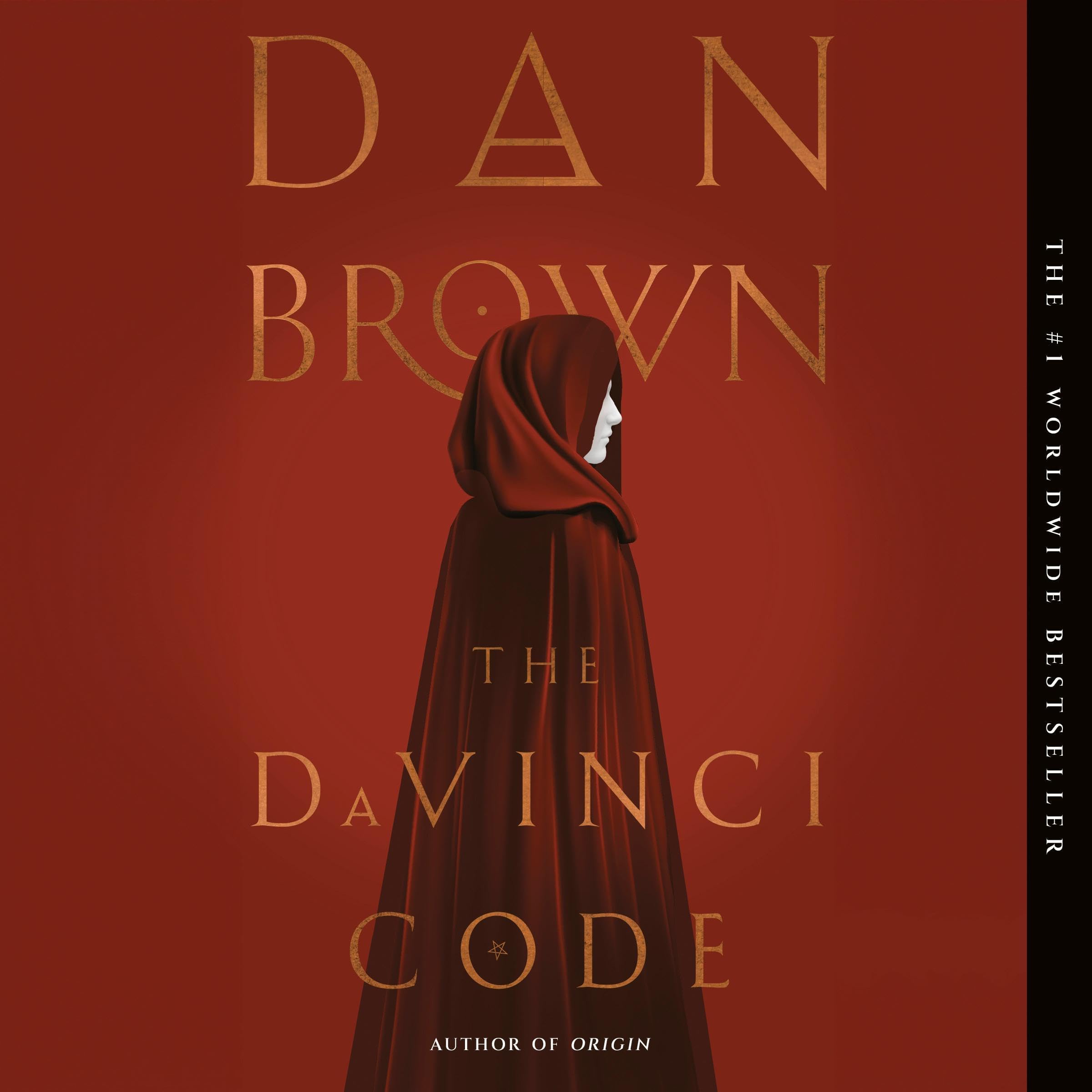
The Da Vinci Code: A Novel
Product ID: 63287976
DISCOVER THE #1 WORLDWIDE BESTSELLING PHENOMENON, WITH MORE THAN 85 MILLION COPIES SOLD—AND DON’T MISS DAN BROWN’S NEW THRILLER, THE SECRET OF SECRETS ! “Blockbuster perfection . . . a gleefully erudite suspense novel.” — The New York Times “A pulse-quickening, brain-teasing adventure.” — People While in Paris, Harvard symbologist Robert Langdon is awakened by a phone call in the dead of the night. The elderly curator of the Louvre has been murdered inside the museum, his body covered in baffling symbols. As Langdon and gifted French cryptologist Sophie Neveu sort through the bizarre riddles, they are stunned to discover a trail of clues hidden in the works of Leonardo da Vinci—clues visible for all to see and yet ingeniously disguised by the painter. Even more startling, the late curator was involved in the Priory of Sion, a secret society whose members included Sir Isaac Newton, Victor Hugo, and Da Vinci, and he guarded a breathtaking historical secret. Unless Langdon and Neveu can decipher the labyrinthine puzzle—while avoiding the faceless adversary who shadows their every move—the explosive, ancient truth will be lost forever. Look for more Robert Langdon novels: The Lost Symbol Inferno Origin The Secret of Secrets Review: Entertaining Indeed! - The Da Vinci Code by Dan Brown is an international best seller that deals with a major cover up by the Christian church that spans thousands and thousands of years. Typically when you involve religion in the topic, it's bound to get many different types of reactions and feelings from the crowd and this is no different. I mean religion does sell right? This is the perfect example of an author cashing in on that aspect. However, when reading this book, I just took it for what it is and that is a book that is suppose to be highly suspenseful and an action thriller. Oh and of course, discovering the big mystery that is suppose to shake the Christian church to its foundation. The Da Vinci Code I can say without a shadow of a doubt, is an excellent book from start to finish provided that you take it for what it is. This can be very hard obviously if you yourself is a devoted Christian because you'll probably not like what the author says about your religion here in this book even though it's considered a fiction piece of work. If you can get past that though, this book is the ultimate definition of a page turner! The Da Vinci Code basically is about what happens when everything is not as simple as we'd like things to be. We were always told the story of Jesus Christ through the Bible as it is suppose to detail an accurate picture of his life. But what if not everything we read is accurate and that the Bible is an actual cover up for the truth of what actually happened with Jesus Christ? Everyone loves a good conspiracy theory and The Da Vinci Code cashes in on that notion when members of an ultra secret brotherhood charged with protecting some important documents that reveal the actual truth about the life of Jesus Christ are murdered. It's surprising to find out that the entire book takes place within the span of just one night. Not many authors can do this and I believe this author uses the same tactic with his other books as well. The problem here for many is that there just isn't enough time to develop the characters. Therefore, what I read from many reviewers is that due to shallow characters, they don't feel an emotional attachment to the story and that they don't care about the outcome. I usually promote strong character growth as well but I find the story in the Da Vinci Code good enough for me to give it a pass in this case. The writing is superb from Dan Brown and this I believe is the first book I have read from this popular author. I find that the book immediately gripped me right from the beginning. I do admit that I had my doubts in the beginning. Like other readers, I usually find books on the best seller list as overrated but The Da Vinci Code is anything but that. The author really sets an incredible pace and he has a knack for not giving away too much all in one go. He slowly lures you in and you'll definitely be saying to yourself "just one more chapter!". Some might not like this as if I remember correctly, it's exactly at the halfway point of this book that the exact mystery is revealed to the readers. As a thriller and mystery, you're going to get your usual doses of action set pieces and the author gives just enough to satisfy our thirsts without drowning us. What I also love about reading The Da Vinci Code is that the author sprinkles in a bit of historical education throughout the book. Those were definitely a blast to read through because typically, we normally don't relate or think about it from a historian's point of view. And believe it or not, you'll be rushing to your computer throughout the book searching for images that the author talks about. So not only are we getting a fantastic suspense thriller in the book, we are also educating ourselves in the process! Whether you believe in what the author writes here is definitely up to you. Everyone loves a good conspiracy and I'm sure The Da Vinci Code stirred up a hornet's next when it was published. I personally am not a completely devoted and religious person but I do believe in a higher being. I definitely read this book with an open mind and it was pretty shocking to find what the author had to say although many others have reported that Dan Brown basically took the ideas of what other authors/historians have written in other lesser known books and used it here in The Da Vinci Code. Nonetheless, this book was a complete page turner and I could hardly put it down! I think this might take the spot for the fastest book read in my collection. Review: The Book That Got Me To Read Books Again - It's been years since this 'The Da Vinci Code' has been out, and I'm sure everything has been said that needs to be said about it, but I would like to share my own personal story about this book. It was around 2004-2005. I was out of university and working. I was one of those Americans that didn't pick up a book after college at the time, you know, the majority of them. Maybe it was because there were no good books around, maybe I thought adult novels were too long, whatever it was, I didn't read. I don't know how I stumbled upon this book. I believe a lot of people were talking about it, a lot, so I thought, "why not give this one a try?" It took a couple of weeks to finish as I like to savor every word an author has written. I read it as fast as I could with each chapter ending in some breathless cliffhanger. And like an episode of television, I didn't want to binge-watch like people do these days; I read a few chapters in each sitting waiting in anticipation for the next day to read more. I don't want to say anything about the topic of the book as I went in completely blind and ended up wonderfully surprised and immensely enjoyed it, and I would want the same for you. (An aside: I grew up Christian, but ended up being an Atheist). I do think an open mind, and some light background knowledge of Christianity will help in truly enjoying this book. I've never read a book like this, if ever, at the time. It was thrilling, it was well-researched, it made me think this could almost be real. It is the definition of a must-read. That's all that should be said about this book. But what I would like to say is that this book was the spark that restarted my love for reading that I had as a kid. I read a lot as a kid, but sometimes we are forced to read things, and kids do not like being forced to do things (parents, that's a lesson for you). The forcing of reading could be a reason I was turned off of books for a few years, but if there was ever a book to get you started again, this is, *the book*. Now, about Dan Brown's ability to write, I've read what others have said about his writing style, and I don't agree with them for this book. I wasn't conscious about it for 'The Da Vinci Code', but I can see and understand other people's perspective on it. However, if you've read one of his books, you've read them all. Dan Brown's books are like James Bond films, they all follow a formula with similar ingredients, but we still keep watching them because the formula works. I do recommend his other books starring Robert Langdon (' Angels & Demons ', ' Inferno ', *NOT* ' The Lost Symbol '—that was a snoozer). Pick The Da Vinci Code up, borrow it, get the illustrated version (it's the best version) [see photos], but read this book if you haven't already. It's significantly better than the film, and I think you will enjoy it as most of the world has. Recommended!
S**N
Entertaining Indeed!
The Da Vinci Code by Dan Brown is an international best seller that deals with a major cover up by the Christian church that spans thousands and thousands of years. Typically when you involve religion in the topic, it's bound to get many different types of reactions and feelings from the crowd and this is no different. I mean religion does sell right? This is the perfect example of an author cashing in on that aspect. However, when reading this book, I just took it for what it is and that is a book that is suppose to be highly suspenseful and an action thriller. Oh and of course, discovering the big mystery that is suppose to shake the Christian church to its foundation. The Da Vinci Code I can say without a shadow of a doubt, is an excellent book from start to finish provided that you take it for what it is. This can be very hard obviously if you yourself is a devoted Christian because you'll probably not like what the author says about your religion here in this book even though it's considered a fiction piece of work. If you can get past that though, this book is the ultimate definition of a page turner! The Da Vinci Code basically is about what happens when everything is not as simple as we'd like things to be. We were always told the story of Jesus Christ through the Bible as it is suppose to detail an accurate picture of his life. But what if not everything we read is accurate and that the Bible is an actual cover up for the truth of what actually happened with Jesus Christ? Everyone loves a good conspiracy theory and The Da Vinci Code cashes in on that notion when members of an ultra secret brotherhood charged with protecting some important documents that reveal the actual truth about the life of Jesus Christ are murdered. It's surprising to find out that the entire book takes place within the span of just one night. Not many authors can do this and I believe this author uses the same tactic with his other books as well. The problem here for many is that there just isn't enough time to develop the characters. Therefore, what I read from many reviewers is that due to shallow characters, they don't feel an emotional attachment to the story and that they don't care about the outcome. I usually promote strong character growth as well but I find the story in the Da Vinci Code good enough for me to give it a pass in this case. The writing is superb from Dan Brown and this I believe is the first book I have read from this popular author. I find that the book immediately gripped me right from the beginning. I do admit that I had my doubts in the beginning. Like other readers, I usually find books on the best seller list as overrated but The Da Vinci Code is anything but that. The author really sets an incredible pace and he has a knack for not giving away too much all in one go. He slowly lures you in and you'll definitely be saying to yourself "just one more chapter!". Some might not like this as if I remember correctly, it's exactly at the halfway point of this book that the exact mystery is revealed to the readers. As a thriller and mystery, you're going to get your usual doses of action set pieces and the author gives just enough to satisfy our thirsts without drowning us. What I also love about reading The Da Vinci Code is that the author sprinkles in a bit of historical education throughout the book. Those were definitely a blast to read through because typically, we normally don't relate or think about it from a historian's point of view. And believe it or not, you'll be rushing to your computer throughout the book searching for images that the author talks about. So not only are we getting a fantastic suspense thriller in the book, we are also educating ourselves in the process! Whether you believe in what the author writes here is definitely up to you. Everyone loves a good conspiracy and I'm sure The Da Vinci Code stirred up a hornet's next when it was published. I personally am not a completely devoted and religious person but I do believe in a higher being. I definitely read this book with an open mind and it was pretty shocking to find what the author had to say although many others have reported that Dan Brown basically took the ideas of what other authors/historians have written in other lesser known books and used it here in The Da Vinci Code. Nonetheless, this book was a complete page turner and I could hardly put it down! I think this might take the spot for the fastest book read in my collection.
B**R
The Book That Got Me To Read Books Again
It's been years since this 'The Da Vinci Code' has been out, and I'm sure everything has been said that needs to be said about it, but I would like to share my own personal story about this book. It was around 2004-2005. I was out of university and working. I was one of those Americans that didn't pick up a book after college at the time, you know, the majority of them. Maybe it was because there were no good books around, maybe I thought adult novels were too long, whatever it was, I didn't read. I don't know how I stumbled upon this book. I believe a lot of people were talking about it, a lot, so I thought, "why not give this one a try?" It took a couple of weeks to finish as I like to savor every word an author has written. I read it as fast as I could with each chapter ending in some breathless cliffhanger. And like an episode of television, I didn't want to binge-watch like people do these days; I read a few chapters in each sitting waiting in anticipation for the next day to read more. I don't want to say anything about the topic of the book as I went in completely blind and ended up wonderfully surprised and immensely enjoyed it, and I would want the same for you. (An aside: I grew up Christian, but ended up being an Atheist). I do think an open mind, and some light background knowledge of Christianity will help in truly enjoying this book. I've never read a book like this, if ever, at the time. It was thrilling, it was well-researched, it made me think this could almost be real. It is the definition of a must-read. That's all that should be said about this book. But what I would like to say is that this book was the spark that restarted my love for reading that I had as a kid. I read a lot as a kid, but sometimes we are forced to read things, and kids do not like being forced to do things (parents, that's a lesson for you). The forcing of reading could be a reason I was turned off of books for a few years, but if there was ever a book to get you started again, this is, *the book*. Now, about Dan Brown's ability to write, I've read what others have said about his writing style, and I don't agree with them for this book. I wasn't conscious about it for 'The Da Vinci Code', but I can see and understand other people's perspective on it. However, if you've read one of his books, you've read them all. Dan Brown's books are like James Bond films, they all follow a formula with similar ingredients, but we still keep watching them because the formula works. I do recommend his other books starring Robert Langdon (' Angels & Demons ', ' Inferno ', *NOT* ' The Lost Symbol '—that was a snoozer). Pick The Da Vinci Code up, borrow it, get the illustrated version (it's the best version) [see photos], but read this book if you haven't already. It's significantly better than the film, and I think you will enjoy it as most of the world has. Recommended!
L**O
Okay, I have read the novel and here is what I think...
In the "Poetics," his famous study of Greek dramatic art, Aristotle compares tragedy to such other metrical forms as comedy and epic poetry. He argues that tragedy, like all poetry, is a kind of imitation (mimesis), but adds that it has a serious purpose and uses direct action rather than narrative to achieve its ends. Aristotle holds that poetic mimesis is imitation of things as they could be, not as they are (i.e., of universals and ideals). Consequently, poetry--that is to say, all literature--is a more philosophical and exalted medium than history, which merely records what actually happened. Aristotle was defending poetry as much as explaining it because there were those in ancient Greece who were deeply offended that anyone should create works of fiction. That would seem to explain some of the reaction to Dan Brown's bestseller, "The Da Vinci Code," that has enraged many theologians who have denounced it as anti-Catholic. Brown takes some credible theories about the early Christians, mines the paintings of Leonardo for helpful symbolism, and creates a series of codes left behind by a dying man, to create a thriller with Biblical implications. However, along the way there is a consistent and compelling critique, not so much of the Catholic Church of today, but of the early history of Christianity. The person who takes the biggest drubbing in the book is not the Pope (either one of them that figure in the story), but the Emperor Constantine. The idea that "The Da Vinci Code" constitutes a revisionist view of Christianity is pretty ironic since it was Paul's transformation of the teachings of Jesus into something more palatable for the Gentiles of the Roman Empire, the history of Christianity has been one of transformation. The big question then becomes whether or not "The Da Vinci Code" is a theological argument dressed up as a mystery that should have been advanced as a scholarly treatise. The position that Christianity fueled a patriarchal society at the expense of Mother Earth permeates the novel, but ultimately it is part of the rationale for solving the mystery, existing more as a function of narrative than a rhetorical stance. Then again, I have no problem with the idea that Jesus will always be an important historical figure, regardless of what information might be discovered or revealed in the future. By the same token, speculation about a possible marriage between Jesus and Mary Magdalene does nothing to distract from the power of his ministry. On the other hand, I fully realize that such a position will be regarded by a great many as heresy, so I grant that the very premise of Brown's novel will be considered offensive by a great many people. All I can offer in response is the belief that Brown was not intending to challenge such beliefs, but wanted to take some interesting ideas and creatively filling some gaps to make a compelling mystery. The key supporting evidence for this idea would be that most of the key characters take all of this for granted, so that they are always explaining rather than advocating these various ideas. Of course, there will be those who are disappointed to find out that everything in this fictional novel is not true and who will be upset that this is indeed a work of fiction. But so what if Leonardo Da Vinci did not hide clues about church secrets in his paintings? All Brown needs is a willing suspension of disbelief on the part of his readers (which may be another reason that true believers are grossly offended by the theological "politics" of this novel); from the perspective of symbolists you can "find" lots of things in any artwork from Da Vinci to Degas to Dali to Dr. Seuss. The idea that that Mary Magdalene was a prostitute is a potent one because it speaks to the power of redemption, where even a fallen woman can be saved. Opus Dei and the Priory of Sion are real organizations, but unless you were well vested in such things it would not have mattered if Brown had made up names for the two groups. But clearly Brown wanted to keep his story as close to the real world as possible, for obvious reasons. If you want to separate the truth from fiction with "The Da Vinci Code," then just wait patiently: I am sure several books claiming to do just that will be published in 2004 (and all of them together will probably sell one-tenth as many copies as Brown's novel). It would especially be nice to have a book that collects images of all the works of art and places that are so pivotal in the novel. "The Da Vinci Code" is a quick and engaging read, where the storytelling matters more than the writing, especially when we are involved in breaking the various codes and making the pieces fit. Actually, I was rather surprised that the cast of characters remained rather small, but the scope of the conspiracy has historical depth rather than contemporary breadth (turning the novel into a screenplay is not going to be difficult: i.e., no characters of subplots have to be eliminated). The characters exist to play the games, solve the riddles, and break the codes because very few readers are going to have a chance to do any of that. I know that Da Vinci wrote backwards in his notebooks and that there are strong similarities between the face of the Mona Lisa and Da Vinci's self portrait, so I was ahead of the curve on a few points, but overall I was just along for the ride (I also knew a bit from playing "Gabriel Knight 3: Blood of the Sacred, Blood of the Damned"). The ending made sense to me from both a narrative standpoint, especially in terms of what ending you could hope to get away with in the context of keeping the story as "real" as possible. But there is also the attendant irony, given the controversy over the book's "attack" on the Chruch, that the ending constitutes more of a matter of faith.
S**A
Great read!
I had this in my “to read” list for the longest time! I’m so glad I finally read it. I grew up Christian and I remember this book being mentioned a lot by the adults at church (not in a very positive way lol) My dad even talked to me about it once but I was too young to understand. Now that i’m an adult, I’m so glad I finally bought it! Super interesting, great plot and great twists in the story. If you’re looking for a good read that’ll have you hooked instantly… THIS IS THE ONE! I will say I thought I had purchased the copy with all the photos inside but the copy I received was just the normal copy. Having the photos would’ve enhanced my experience but GREAT BOOK either way!
J**E
Much More Than A Super Suspense Thriller!!
Once I began this extraordinary book, I could not put it down. "The Da Vinci Code" is so much more than a gripping suspense thriller. Dan Brown takes us beyond the main plot and leads us on a quest for the Holy Grail - a Grail totally unlike anything we have been taught to believe. With his impeccable research, Mr. Brown introduces us to aspects and interpretations of Western history and Christianity that I, for one, had never known existed...or even thought about. I found myself, unwillingly, leaving the novel, and time and time again, going online to research Brown's research - only to find a new world of historic possibilities opening up for me. And my quest for knowledge and the answers to questions that the book poses, paralleled, in a sense, the quest of the book's main characters. What a trip! What a read! A violent murder is committed in the Louvre Museum. The museum's chief curator, who is also the head of a remarkable secret society that has existed since the death of Christ, is found dead and gruesomely positioned on the floor near The Mona Lisa. In the minutes before he died, this very complex man was able to leave clues for his daughter to follow. The daughter, a brilliant cryptographer, along with a famed US symbologist, follow her father's codes and leads, hoping that he will, through his death, finally tell her what he wanted to confide in her while he lived. The secret society included members such as: Leonardo Da Vinci, Boticelli, Gallileo, Isaac Newton, Victor Hugo, Jean Cocteau, etc. These folks really Did belong to this society, which Really existed! This is when I first began my online search. The mystery, or mysteries, take us through England, France and far back in time. We learn about the secret of the Knights Templar, and the symbolism in many of the world's most treasured paintings, as well as architectural symbolism in some of history's most sacred churches. Of course, we also learn who committed the murder and why - although this is almost secondary next to the real epic mystery the novel uncovers. If there are flaws in the plot, I was too busy reading to discover any. That is probably the sign of a terrific book! The writing is excellent and the characters are a bit on the super-hero/heroine side, but who cares? Is what "The Da Vinci Code" proposes true? Well, the research is correct. The historical events and people explored in the book are real. But no one knows the Truth...nor will we ever, probably. I think that some things are meant to be a mystery. With all the world's diverse religions and each individual's belief in what is Divine - the Truth would have to destroy the beliefs, hopes and lives of many of the world's population. So, perhaps, in the divine scheme of things, there are many more Truths than one. Don't take the book too seriously. Just read it and enjoy!
D**E
great story
No wonder this was such a bestseller! I’m late to the party but am excited to read his other books.
M**.
Amazing !
A wonderful fairy tale ! So complex ,yet so simply devine. I wish for a night, sleeping under the stars with nature's embrace to keep one warm and safe.
S**Y
This review is specific to the Special Illustrated Edition
While the storyline of 'The DaVinci Code' is fast paced, it's predictable and rather preachy at times with Brown's knowledge of artworks and Parisian topography. Having never been to Paris or had the opportunity to visit the Louvre, I might have been lost in the sea of descriptions had it not been for The Illustrated Edition of this book. The plot can be summed up quickly. Robert Langdon, a Harvard Professor of Religious Symbology, is summoned from his Paris hotel room to the Louvre, where curator Jacques Sauniere has been strangely murdered. Sauniere left behind cryptic clues as to the whereabouts of the Holy Grail, long protected by a secret brotherhood called the Priory Of Sion. Its up to Langdon, accused of the murder, and Agent Sophie Neveu from the French police cryptology division to unravel the secrets of Sauniere's code before the Opus Dei religious sect steals the secret of the Grail; and they will stop at nothing. Though I found it easy to guess who The Teacher was, and found the ending to be almost an apology, the story was fast paced and entertaining in a vanilla sort of way. What made this book rise from three to four stars was the beauty of the Illustrated Edition. The Illustrated Edition is packed with full color photos of items mentioned in the book, such as a 'cilice belt' and the nautilus of a shell, but also the pieces of art mentioned and photos of places such as the Louvre, Westminster Abbey, and the many cathedrals mentioned. I believe I would have been lost at times without the visual references, or spending a lot of time googling images. The Illustrated Edition made the story faster, more colorful, and easier to read. The book is very beautiful. You get the feeling you are holding an art book and reading a fantastical history, but must remind yourself this is simply a work of fiction no matter how many references were used. Fiction twists fact even while it exposes it. Overall, I would say this is a good story made much better by spending a few extra dollars for the Illustrated Edition. Enjoy!
T**T
Book
Great product
R**E
Verzonden zonder bescherming
Boek kwam binnen maar is niet voorzien van een vorm van bescherming (zoals plastic seals etc). Hierdoor is het boek als nieuw verkocht aan mij maar binnengekomen met de nodige beschadigingen.
H**R
Book was delivered in a great condition
I am so happy I got the highest quality delivered
H**H
Holy grail
Very captivating book. Quest for holy grail makes you wonder about it whole the time.
M**L
A thriller that makes museums churches and paintings feel like riddles waiting to be solved
Talking about The Da Vinci Code feels like talking about a machine built purely to keep your brain awake at three in the morning. Dan Brown did not write this book with the quiet patience of literary fiction. He built it like an engine. Every chapter clicks forward with deliberate momentum, each revelation pushing you deeper into a maze of history, art, and secrets. What makes the novel addictive is the way Brown weaponizes curiosity. He takes things that already exist in the world around us paintings, churches, ancient symbols and suddenly treats them like locked doors. Once he plants the idea that something might be hidden behind those doors, the reader cannot resist trying to unlock them. The art history woven through the story gives the book a strange thrill. Paintings you may have seen before suddenly feel alive with hidden possibilities. Familiar works begin to look like puzzles waiting to be decoded. Brown understands that art carries mystery simply because it survives across centuries. He taps into that feeling and turns it into narrative fuel. Another reason the book works so well is its pacing. Brown writes with relentless urgency. Chapters often feel like breaths taken between sprints. You finish one page thinking you will stop soon and suddenly you are fifty pages deeper, still chasing the next clue. But beneath the chase there is also something playful about the novel. It invites the reader into the puzzle. You are not just watching characters solve riddles. You are solving them alongside them, testing ideas in your own head as the story unfolds. By the end you realize why the book became such a global phenomenon. It taps into one of the most powerful human instincts curiosity about the past and the possibility that history still hides secrets beneath its surface. And Dan Brown understood something very simple yet very effective. If you take art, history, religion, and wrap them inside a fast moving mystery, the result becomes almost impossible to put down.
Trustpilot
3 weeks ago
1 month ago